
A Serious Flagship With One Truly New Trick
The Samsung Galaxy S26 Ultra is not a phone trying to act modest. It is big, expensive, powerful, camera-heavy, and built for users who want nearly every premium feature Samsung can fit into a slab phone. The real question is not whether the S26 Ultra is good. It clearly is. The better question is whether it feels meaningfully better than the last few Ultra models, and whether normal users will actually benefit from its upgrades.
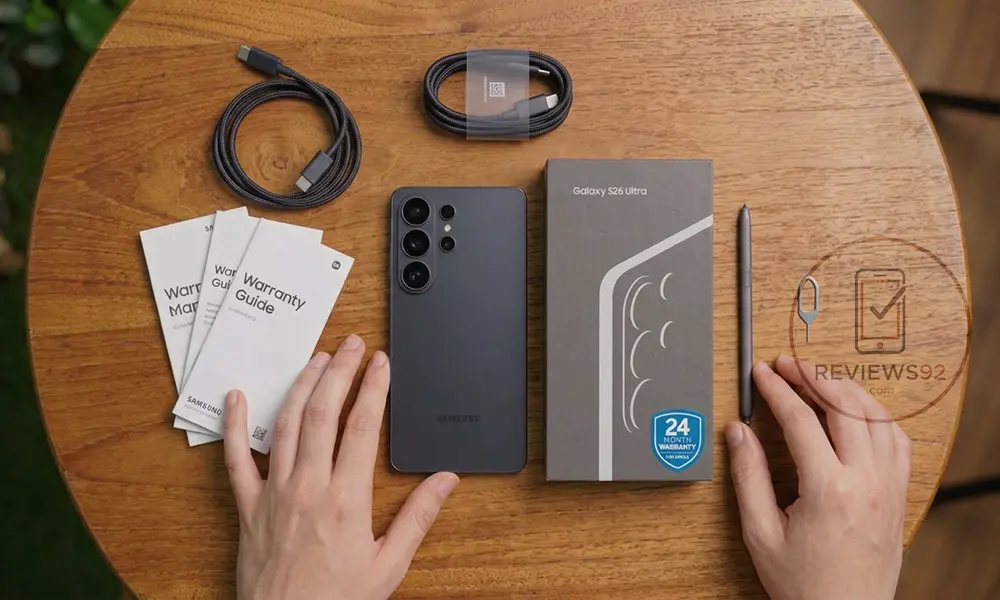
Samsung officially launched the Galaxy S26 Ultra with a 6.9-inch QHD Plus Dynamic AMOLED 2X display, Snapdragon 8 Elite Gen 5 for Galaxy processor, up to 16GB RAM, up to 1TB storage, a 200MP main camera, built-in S Pen, 5000 mAh battery, and 60W wired charging. It went on sale from March 11, 2026, with pricing starting at $1,299.99 in the US.
Quick Verdict
The Galaxy S26 Ultra is one of the most complete Android phones of 2026. Its strongest areas are display quality, performance, zoom camera flexibility, video recording, long software support, gaming stability, and productivity features. The built-in Privacy Display is the most interesting new addition because it solves a real public use problem without needing a separate privacy screen protector.
Still, this is not a revolutionary upgrade. The battery capacity remains 5000 mAh, the camera system is still familiar in structure, and the phone is still huge. If you already own a recent Galaxy S Ultra, especially an S24 Ultra or S25 Ultra, the S26 Ultra may not feel like a necessary jump. For users coming from an older Galaxy, a midrange phone, or another Android flagship, this is a proper premium monster.
Key Specifications
Display: 6.9-inch QHD Plus Dynamic AMOLED 2X, adaptive 1 to 120Hz refresh rate, 2600 nits peak brightness
Processor: Snapdragon 8 Elite Gen 5 for Galaxy
RAM and storage: 12GB RAM with 256GB or 512GB storage, 16GB RAM with 1TB storage
Rear cameras: 200MP wide, 50MP ultra wide, 10MP 3x telephoto, 50MP 5x telephoto
Front camera: 12MP wide selfie camera
Video: 8K at 30fps, 4K at 120fps in Pro Video, 4K at 60fps selfie video
Battery: 5000 mAh typical capacity
Charging: 60W wired charging, up to 75 percent in around 30 minutes
Wireless charging: Qi2 wireless charging support
Durability: IP68 water and dust resistance
Build: Armor Aluminum frame, Gorilla Armor 2 on the front, Gorilla Glass Victus 2 on the rear
Software: Android 16 with One UI 8.5
Special features: Built-in S Pen, Privacy Display, Galaxy AI, UWB, NFC, Wifi 7, USB Type C
Size and weight: 163.6 x 78.1 x 7.9 mm, 214g.
Design and Build Quality
The Galaxy S26 Ultra keeps the classic Ultra identity but softens the shape slightly. It is thinner and lighter than its direct predecessor, measuring 7.9 mm thick and weighing 214g. That sounds manageable on paper, but let us be honest: this is still a large phone. One-handed use is possible only if you have big hands or enjoy finger gymnastics.
Samsung uses an Armor Aluminum frame instead of titanium. That makes the phone lighter, but aluminum is softer than titanium, so scratches and small marks may appear more easily over time. The front uses Corning Gorilla Armor 2, while the back uses Gorilla Glass Victus 2. IP68 protection is also included, meaning the phone is built to survive dust and freshwater exposure under Samsung’s stated test conditions.
The rear camera design looks cleaner than before, but the camera rings still stick out noticeably. On a table, the phone will not sit perfectly flat unless you use a case. That is not shocking for an Ultra phone, but it matters if you type while the device is lying down.
The built-in S Pen remains one of the biggest practical advantages of the Ultra line. It is useful for notes, signing documents, sketching, editing photos, marking screenshots, and precise navigation. Many users may ignore it, but for students, business users, creators, and people who work with PDFs, it is genuinely valuable.
Display Quality
The display is one of the strongest reasons to buy the Galaxy S26 Ultra. Samsung uses a 6.9 inch QHD Plus Dynamic AMOLED 2X panel with an adaptive 1 to 120Hz refresh rate and 2600 nits peak brightness. In daily use, that means smooth scrolling, excellent outdoor visibility, deep blacks, rich colors, and crisp text. Samsung also says ProScaler and improved mDNIe processing help make images and video appear clearer and more refined on the S26 Ultra.
For watching Netflix, YouTube, HDR content, sports, or gaming streams, this screen is excellent. It is large enough to feel almost mini tablet-like, but still pocketable if your pockets are not tiny. The viewing experience is bright, punchy, and fluid.
The downside is obvious: the size. If you prefer compact phones, this device will feel like carrying a glass passport. It is great for media, gaming, reading, editing, and multitasking, but not ideal for users who want something light and discreet.
Privacy Display
The Privacy Display is the standout feature of the Galaxy S26 Ultra. It reduces side visibility so people beside you cannot easily read your screen. Unlike a regular privacy screen protector, this is built into the display system and can be turned on or adjusted through software.
Samsung says users can apply Privacy Display to the full screen, certain apps, notifications, PIN entry, passwords, Lock Screen, or Secure Folder. Independent testing also found that it makes the screen very difficult to read from an angle, although it cannot stop someone standing directly behind you from seeing the display.
This is not a flashy party trick. It is better than that. It is a useful feature for banking apps, messaging, work emails, travel documents, passwords, and private notifications in public places. Trains, buses, airports, offices, cafes, and classrooms are exactly where this feature earns its rent.
Performance
The Galaxy S26 Ultra runs on the Snapdragon 8 Elite Gen 5 for Galaxy. Samsung says the chip brings CPU, GPU, and NPU improvements, including up to 19 percent better CPU performance, 24 percent better GPU performance, and 39 percent better NPU performance compared with the previous generation. The redesigned vapor chamber also improves heat control during heavy tasks.
In real use, this phone is built for heavy multitasking. Switching between camera, browser, maps, social apps, editing tools, messaging, and gaming should feel fast and stable. The Ultra also has enough RAM for demanding users, with 12GB on the 256GB and 512GB models and 16GB on the 1TB version.
For most people, the S26 Ultra is overpowered. That is not a complaint. It means the phone should age well, especially with Samsung’s long software support. But if you only use your phone for calls, WhatsApp, Instagram, browsing, and photos, you will not fully use this level of hardware.
Gaming Review
The Galaxy S26 Ultra is an excellent gaming phone, even though it does not look like a dedicated gaming device. The Snapdragon 8 Elite Gen 5 for Galaxy, improved GPU, 120Hz AMOLED screen, large display, and better cooling system all work together to deliver a strong gaming experience.
Samsung says the vapor chamber has been redesigned to spread heat more efficiently, and ray tracing support is available on the Galaxy S26 series, depending on game and app support.
In practical terms, games like Genshin Impact, PUBG Mobile, Call of Duty Mobile, Mobile Legends, Fortnite, Asphalt, and high frame rate racing or shooter titles should run smoothly at high settings. The large screen gives better visibility, and the speakers help create a fuller gaming feel.
The phone is not perfect for gaming, though. Its large size can be tiring during long handheld sessions, and it may still warm up under sustained load. Also, serious mobile gamers may still prefer dedicated gaming phones with shoulder triggers, stronger cooling accessories, or more aggressive performance controls. But for a mainstream flagship, the S26 Ultra is easily among the best gaming Android phones of its generation.
Battery Life
Samsung keeps the S26 Ultra at 5000 mAh typical capacity. That is solid, but not exciting anymore. Many users expected Samsung to push beyond 5000 mAh, especially because Chinese flagships are becoming more aggressive with larger batteries and faster charging.
Still, battery life should be very good because the processor is efficient, the display is adaptive, and One UI gives several battery management tools. Samsung claims up to 31 hours of video playback, while independent review experience suggests the phone can last around two days with mixed use and around eight hours of active screen use, depending on settings, network, brightness, and app behavior.
For normal users, this is an all-day phone with comfort. For heavy users, it should still survive a demanding day of camera use, navigation, social apps, messaging, gaming, and streaming. If you run QHD Plus resolution, high brightness, 5G, Always On Display, gaming, and camera recording all day, expect faster drain. Physics still collects taxes.
Charging
Charging is one of the more meaningful upgrades. The Galaxy S26 Ultra supports 60W wired charging with Super Fast Charging 3.0, and Samsung says it can reach up to 75 percent in around 30 minutes.
That is a big improvement for Samsung, although it is still not the fastest in the wider Android market. Some competing phones charge much faster. But Samsung usually takes a more conservative approach to charging, likely to balance speed, safety, and long-term battery health.
Wireless charging is also supported, including Qi2. The catch is that the phone does not have built in magnets, so users who want magnetic alignment or magnetic accessories will need a compatible case. That is slightly annoying. A premium phone at this price should make wireless charging as effortless as possible.
Rear Camera Quality
The camera setup is versatile and serious:
200MP wide camera
50MP ultra-wide camera
10MP 3x telephoto camera
50MP 5x telephoto camera
Up to 100x Space Zoom
8K video at 30fps
4K Pro Video at 120fps
Samsung’s 200MP main camera uses a wider F1.4 aperture, which allows more light into the sensor. Samsung claims this improves brightness by 47 percent compared with the previous setup. The 50MP 5x telephoto camera also gets a brighter F2.9 lens, helping zoom shots in darker scenes.
In daylight, expect sharp detail, strong dynamic range, vibrant colors, and Samsung’s familiar punchy image style. Samsung photos often look ready to share straight from the camera, though some users may find the processing a little too bold compared with more natural camera phones.
The main camera is strong for landscapes, portraits, city shots, food, pets, products, and general family photography. The 200MP mode is useful when you want extra detail in bright conditions, but most users should stick to default pixel binned shooting because file sizes are smaller and processing is more practical.
Ultra Wide Camera
The 50MP ultra-wide camera is one of the best parts of the S26 Ultra camera system. It is useful for landscapes, architecture, indoor group photos, travel content, and creative wide-angle shots. It also helps with close up shots, depending on Samsung’s focus behavior and camera mode.
The higher resolution gives Samsung more room to preserve detail compared with older, lower-resolution ultra-wide sensors. Distortion is still something to watch near the edges, especially with people, but this is normal for ultra-wide cameras.
Zoom Camera
The Galaxy S26 Ultra remains one of the most flexible zoom phones. It offers 3x optical zoom, 5x optical zoom, 2x and 10x optical quality zoom, and up to 100x digital zoom.
The 5x telephoto camera is the more exciting zoom lens. It gives cleaner portraits, better reach, and improved low light zoom compared with older telephoto systems. The 10x optical quality zoom is useful in good lighting, especially for buildings, stage shots, signs, wildlife, and travel details.
The 3x telephoto camera is still useful for portraits, but it is the least impressive rear camera here. It does the job, but compared with the main and 5x cameras, it feels less special.
The 100x zoom remains more of a “look how far this can see” feature than something you will use for high quality photography. Up to 10x can be very usable. Around 20x to 30x can still work depending on lighting and subject. Beyond that, quality drops quickly.
Night Photography and Low Light
Low light photography is one of the real improvements. The wider aperture on the main camera helps pull in more light, and Samsung’s Nightography processing reduces noise while keeping images bright. The result should be cleaner night shots, better indoor photos, and stronger video in dim environments.
Samsung’s style tends to brighten night scenes more than reality, which many users like because the photos look lively. Purists may prefer a more natural night look. For social media, though, Samsung’s processing usually wins hearts faster than a quiet candlelit photo with “accurate mood.”
Video Recording
The Galaxy S26 Ultra is a strong video phone. It supports 8K at 30fps and 4K at 120fps in Pro Video mode. Samsung also highlights improved Nightography Video, better stabilization, and horizontal lock for steadier footage. The S26 Ultra is also the first Galaxy device to support APV, a professional grade video codec designed for efficient high quality production workflows.
For creators, vloggers, reviewers, TikTok users, YouTubers, and mobile journalists, this is a very capable pocket camera. Stabilization is strong, autofocus is reliable, and Samsung gives plenty of camera modes. The Expert RAW app also helps users who want more manual control.
The only honest complaint is consistency. Samsung cameras are powerful, but their processing can sometimes shift between lenses, especially in color tone, sharpness, and exposure. It is much better than older generations, but still not invisible.
Selfie Camera
The front camera is a 12MP wide autofocus sensor with 4K video recording at up to 60fps. Samsung also says the front camera benefits from AI ISP processing for more refined and natural looking selfies.
Selfies should look sharp, clean, and social media ready. Autofocus is important because it keeps faces clearer at different distances, which helps with group selfies and handheld vlogging. Skin tones are generally pleasing, although Samsung’s beautification and processing can sometimes make faces look smoother than reality unless adjusted.
For video calls, Reels, Shorts, Snapchat, Instagram stories, and vlogging, the front camera is more than good enough.
Software and Galaxy AI
The Galaxy S26 Ultra ships with Android 16 and One UI 8.5. Samsung’s software is feature rich, polished, and highly customizable. You get split screen multitasking, Edge Panels, DeX support, Secure Folder, advanced camera tools, routines, Samsung Notes, SmartThings, extensive theme controls, and deep ecosystem features.
Galaxy AI is everywhere. Some features are useful, such as transcription, photo editing, text assistance, call tools, Circle to Search, document scanning, and contextual suggestions. Samsung also includes upgraded Bixby, Gemini, and Perplexity support. The new Now Nudge feature can suggest actions based on what is happening on screen or in supported apps.
The blunt truth: not every AI feature feels essential. Some tools are genuinely helpful. Others feel like Samsung trying to decorate every room with an AI lamp. The phone is excellent even if you ignore half of the AI features.
A major win is software support. Samsung promises seven generations of OS upgrades and seven years of security updates from launch, which gives the S26 Ultra long term value.
Sensors and Security
The Galaxy S26 Ultra includes the expected premium sensor package: ultrasonic under display fingerprint sensor, accelerometer, gyroscope, proximity sensor, compass, barometer, GPS and other satellite positioning systems, NFC, UWB, and the S Pen digitizer system.
The ultrasonic fingerprint reader is fast and secure, and it usually works better than optical scanners in difficult lighting. Face unlock is available through the front camera, but fingerprint unlock is the stronger security option.
Samsung Knox, Secure Folder, Auto Blocker, Theft Protection, Private Sharing, Secure Wifi, Knox Vault, and other privacy tools add another layer for users who care about security. Privacy Display also gives the S26 Ultra a unique physical privacy advantage in public spaces.
Connectivity
Connectivity is flagship grade. The Galaxy S26 Ultra supports 5G, Wifi 7, NFC, Bluetooth 6, UWB, GNSS, and USB Type C.
Wifi 7 is useful if you have a compatible router and fast broadband. UWB helps with precise device finding, digital keys, and supported smart accessories. NFC covers contactless payments. USB Type C is used for charging, data, and accessory support.
There is no 3.5 mm headphone jack, which is normal for premium Samsung phones now. Users will need wireless earbuds or a USB Type C audio adapter.
Audio and Haptics
The stereo speakers are loud, clear, and suitable for videos, calls, gaming, and casual music listening. You still get better sound from proper earbuds or headphones, but for built in speakers, the experience is strong.
Haptics are crisp and premium. This matters more than people think. Good vibration feedback makes typing, gestures, gaming, and notifications feel more precise.
Storage Options
The Galaxy S26 Ultra comes in three storage versions:
12GB RAM with 256GB storage
12GB RAM with 512GB storage
16GB RAM with 1TB storage
The 256GB model is fine for most users. The 512GB version is the safer choice if you record lots of video, play large games, or keep years of photos offline. The 1TB model is for creators, heavy travelers, gamers, and people who hate deleting anything. There is no microSD card slot, so choose carefully before buying.
Real User Experience
For daily use, the Galaxy S26 Ultra feels like a phone that refuses to be caught unprepared. Camera? Strong. Display? Excellent. Performance? Overkill. Battery? Reliable. Notes? S Pen. Privacy? Built in display protection. Gaming? Smooth. Travel? Great zoom and long battery life. Work? DeX, multitasking, PDF signing, Secure Folder.
The weakness is not capability. The weakness is comfort and price. It is big. It is expensive. It is not dramatically different from the last few Ultra phones. And some AI features are not as magical as the marketing suggests.
Pros
Excellent 6.9 inch AMOLED display
Built in Privacy Display is genuinely useful
Powerful Snapdragon 8 Elite Gen 5 for Galaxy chip
Strong gaming performance
Improved cooling system
Versatile quad rear camera setup
Excellent 5x zoom camera
Good low light photo and video performance
8K video and 4K 120fps Pro Video
Reliable all day battery life
Faster 60W wired charging
Built in S Pen
IP68 protection
Seven years of software support
Premium connectivity with Wifi 7, UWB, NFC, and 5G
Cons
Very expensive
Large body is not comfortable for everyone
Battery capacity is still 5000 mAh
No built in magnetic ring for Qi2 accessories
No microSD card slot
No headphone jack
3x telephoto camera is not as impressive as the rest
AI features are useful but also overhyped
Not a huge upgrade for recent Ultra owners
Should You Buy the Samsung Galaxy S26 Ultra?
Buy the Galaxy S26 Ultra if you want one of the most complete Android phones available, especially if you care about display quality, camera versatility, gaming, long software support, productivity, privacy, and S Pen features.
Skip it if you already own a Galaxy S24 Ultra or S25 Ultra and your phone still works well. The S26 Ultra is better, but not better enough to justify spending flagship money unless you really want Privacy Display, faster charging, improved low light camera performance, and the newer processor.
For users upgrading from an older Galaxy S21 Ultra, S22 Ultra, Note series device, midrange Samsung phone, or an older iPhone, the S26 Ultra will feel like a massive upgrade. For recent Ultra owners, it is more of a refinement than a reinvention.
Final Rating
Overall rating: 9.1 out of 10
Display: 9.7
Performance: 9.6
Gaming: 9.4
Rear camera: 9.3
Selfie camera: 8.8
Battery: 8.8
Charging: 8.7
Software: 9.2
Build quality: 9.0
Value for money: 8.1
The Samsung Galaxy S26 Ultra is a powerhouse, but not a miracle machine. Its best new feature is not raw speed or another camera number. It is Privacy Display, because it improves how people actually use phones in public. Add that to elite performance, strong cameras, a superb screen, better charging, and long software support, and you get one of the safest premium Android recommendations of 2026. Just be ready for the size, the price, and the fact that Samsung is polishing the Ultra formula more than rebuilding it from scratch.
